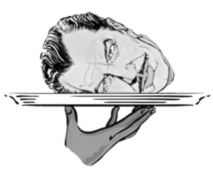
Dodine de Canard

[su_heading]Once again Price sends me into a flailing tizzy over details which I find maddening.[/su_heading]
First, Price mentions in the epistolary paragraph that Escoffier cooked this dish for Sarah Bernhardt but doesn’t say anything else, which makes me crazy because Escoffier and Bernhardt were kind of a thing and historical celebrity dirt is my crack. But this rich delicious decadent dish does not bear her name, as do two other dishes Escoffier developed. I feel like Price was just alluding to the affair between the chef and the actress as if it were still risqué, though it probably occurred more than 80 years before the publication of the Treasury.
Second, in the recipe, we are directed parenthetically to seek instructions for boning a fowl in the index, instructions which I cannot locate even after literally scanning those pages letter by letter as if the damn duck boning instructions could hide behind an adjective.
Finally, for the stuffing, we have the option of using 8 tables spoons of Madeira or truffle juice. What the fuck is truffle juice? Have you ever seen a truffle? They’re like a hairy golf ball. There’s no juice. And even if you could miraculously press them through some kind of alien steampunk juicer and retrieve said juice, you’d probably need eight pounds of truffle to get it which would run you about 11,000 US.
Except I’m an idiot and oh yes it is a thing. Truffle juice is about to become my new favorite goddam thing in the world because it combines two of my wheelhouse flavors: truffles and pot liquor. To make truffle juice, you simmer truffles in a pot of water then retain the juice. For the life of me I can’t find a decent recipe but apparently, one exists somewhere at Alinea because for Grant Achatz truffle juice is heroin.
What’s a dodine and how do you get a canard inside it?
A dodine is a galantine that’s roasted, not poached. To make a galantine, one debones a varmint of choice, most typically a fish or fowl. One then removes the meat and edible jiggly parts, mixes them with various ingredients, then rolls it all back into the deboned carcass which is sewn together then pressed into a cylindrical shape and cooked. If that sounds like bologna to you, then you’re kind of right. Gallantines are kind of super fancy sausages (we get galantine from gallant). Galantines are rich so they’re often served in a single slice as part of a charcuterie platter.
My experience deboning ducks is limited and fraught with danger. As Lauren Parton will tell you, prepping birds is not my fortè. But I do try and I will tell you it is a goddam pain in the ass until you learn how. You really need to debone a whole flock before you find that weird butcher’s understanding of feeling bones then removing those bones while keeping all your own bones. Watch this video (just deal with the music, man) to maybe kind of learn how to deconstruct a canard.
Further frustrations de canard de Vincent Price
And what about that small leg bone Price told you to leave in the bird? What do you do with it? I don’t know. He never says a word about it. Maybe use it to pick your teeth? I have no idea.
My final flailing frustration with Price in this recipe is where he nonchalantly tells you to “Remove as much of the solid fat as possible . . .” I just don’t get it. Duck fat is liquid gold. I mean, cook it on a rack but render that lard! #fatiswhereitsat
[amd-yrecipe-recipe:25]